Published: August 31, 2026
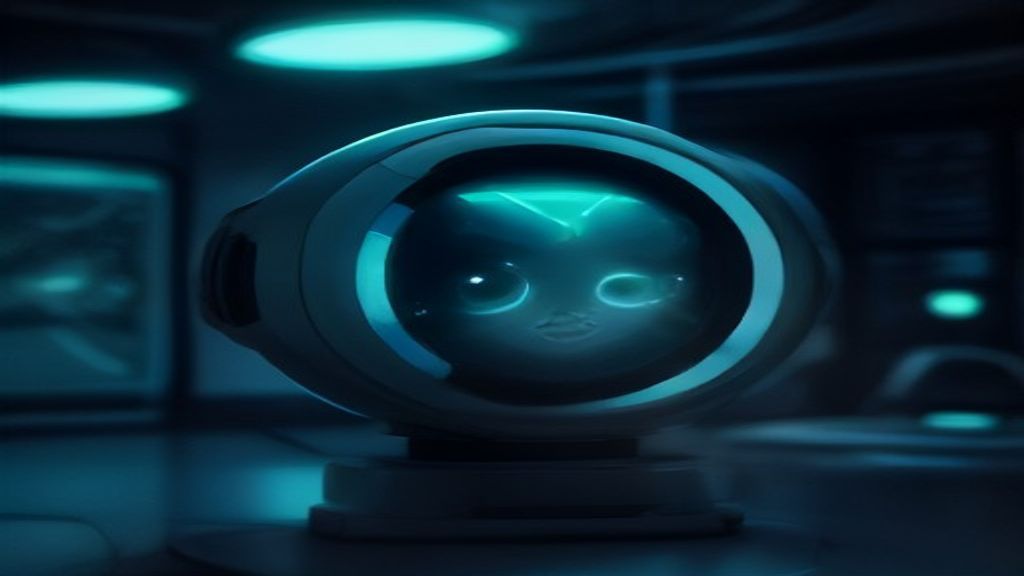
In the late 2010s, the consumer electronics market witnessed the arrival of the first modern companion robots. These devices charmed early adopters with expressive movements, speech synthesis, and basic interactive behaviors. However, once the novelty of voice-triggered jokes wore off, many of these systems suffered from a fundamental design flaw: they were reactive, cloud-dependent appliances with limited utility. When their parent companies folded and turned off remote servers, these expensive units became bricked hardware, leaving owners with a sense of loss akin to losing a pet.
Today, the robotics industry is undergoing a structural paradigm shift. We are moving away from gimmicky, high-frequency assistants toward what is known as “gentle intelligence.” This philosophy prioritizes continuous, ambient presence over transactional utility. For embedded developers and robotics engineers, this transition presents a fascinating set of hardware and software challenges: building systems that are contextually aware, capable of long-term behavioral adaptation, and completely secure at the edge.
The Evolution of Social Robotics: Moving Beyond the Gimmick
The Problem Space: Solving Isolation with Presence
Societal isolation is no longer a niche problem. Studies indicate that nearly a third of older adults live alone, lacking consistent daily contact. Similarly, children in households with geographically distant working parents often experience heightened levels of loneliness. While traditional communication tools like video calls, instant messaging, and smart displays help bridge distances, they are scheduled, transactional interventions. They do not foster a continuous sense of presence.
Next-generation companion robots are engineered to fill this exact gap. The industry is rapidly growing to meet this demand. The global market for AI companions, valued at roughly $36.8 billion in 2025, is projected to climb to $48 billion in 2026, eventually reaching an estimated $318 billion by 2033—representing a compound annual growth rate (CAGR) of 31 percent. This growth is driven by three core design transitions:
- Proactive Interaction: Shifting from passive wake-word triggers to continuous environment monitoring using multi-modal sensor fusion.
- Emotional Design: Designing hardware interfaces that prioritize user comfort, psychological safety, and non-verbal communication.
- On-Device Architecture: Transitioning from centralized cloud-processing models to decentralized, private edge computing.
Inside the Hardware Architecture of the OlloNi SS1
To understand how these concepts manifest in physical hardware, we can look at the architecture of modern platforms like Ollobot’s OlloNi SS1. Unlike classical industrial or service robots designed for task automation, the SS1 is built specifically for long-term household coexistence. This requires a complex integration of parallel sub-systems managing vision, acoustics, mobility, and local computation.
1. The Edge AI Compute Engine (The "Heart Module")
Relying on external cloud servers for real-time vision and emotional state-machine processing introduces latency, bandwidth bottlenecks, and severe privacy concerns. The SS1 addresses this by performing its core processing on-device. The system features a proprietary hardware architecture equipped with 16 GB of system RAM and 64 GB of local storage. This allows the robot to run localized computer vision models, speech-to-text engines, and an adaptive behavioral database entirely at the edge without requiring constant cloud queries.
2. Multi-Sensor Vision and Spatial Awareness
For a robot to interact proactively, it must understand its environment. The SS1 utilizes a multi-chip AI 4K vision module capable of real-time facial recognition, skeleton tracking, and depth mapping. This allows the system to distinguish between family members and household pets, track moving targets smoothly, and recognize postural shifts (such as a fall or sudden inactivity).
To address the inevitable privacy concerns surrounding an active camera in private spaces, the hardware includes a physical camera shutter. This mechanical override gives users absolute, visual confirmation that optical monitoring is disabled, bypassable only by physical intervention.
3. Omnidirectional Audio Capture
Natural communication requires a robust acoustic front-end. The robot integrates a circular 6-microphone array designed for far-field audio capture. By leveraging digital signal processing (DSP) techniques such as acoustic echo cancellation (AEC), blind source separation, and beamforming, the system can reliably isolate and recognize voice commands from up to 5 meters away, even in noisy domestic environments.
4. Mechatronics and Indoor Locomotion
Stationary devices are inherently limited in their capacity to provide presence. The SS1 features a mobile chassis designed to navigate typical household terrain. Equipped with low-noise brushless DC motors and high-resolution wheel encoders, the robot can traverse transitions between hardwood, ceramic tiles, and low-pile carpets. It is rated to climb inclines of up to 3.5 degrees, allowing it to move seamlessly between rooms to maintain proximity with household members.
| Hardware Subsystem | Technical Specifications | Primary Function |
|---|---|---|
| Compute Module | On-device "Heart Module" with 16GB RAM / 64GB Storage | Local AI inference, facial recognition database, and local memory |
| Vision Module | Multi-chip AI 4K camera with physical privacy shutter | Motion tracking, fall detection, and behavioral observation |
| Acoustic Array | 6-microphone far-field array (up to 5m range) | Omnidirectional voice-pickup, wake-word localization |
| Power System | High-capacity Li-ion battery (5 hours active / 12 hours standby) | Continuous daily operation and autonomous dock-seeking |
The Software Paradigm: Decoupling Emotion and Utility
One of the most innovative design details of the SS1 is its "2+1" multi-display configuration. Traditional consumer robotics often attempt to display all information on a single tablet-like screen. The SS1 separates these functions physically:
- The Side Screens (The "Eyes"): Two dedicated circular displays project expressive, stylized digital eyes. These displays do not show text, UI buttons, or status icons; their sole purpose is to convey focus, emotional states, and non-verbal cues.
- The Main Screen: A separate primary display is reserved for information retrieval, system configurations, and video calling interfaces.
By decoupling emotional signaling from informational displays, the robot maintains a clean social presence even when performing complex, screen-heavy tasks. This prevents the user interface from feeling like an intrusive computer monitor on wheels.
The system runs on a highly customized Android OS, enabling continuous system upgrades via over-the-air (OTA) updates. Over time, the local behavioral model develops a unique baseline of the home’s daily schedule. Rather than waiting for a command, deviations from this baseline (such as an elderly resident not entering the kitchen during their usual morning window) trigger gentle, proactive check-ins or alert remote family members via a companion mobile application.
Implications for Embedded Developers and Makers
For developers working with platforms like the ESP32, Raspberry Pi, or custom ROS (Robot Operating System) deployments, the evolution of companion robots like the OlloNi SS1 highlights a critical lesson: successful consumer robotics is not about maximizing raw processing power in the cloud. It is about maximizing hardware-software integration at the edge.
Developing low-latency, highly secure, and energy-efficient systems requires a deep understanding of hardware constraints. Whether it is optimizing power-down states to achieve 12-hour standby windows, implementing hardware-level privacy switches, or processing real-time video streams locally without overheating the chassis, the future of robotics lies in balanced, thoughtful embedded design. The success of next-gen companion platforms will be measured not by how many tasks they automate, but by how seamlessly they blend into the background of our daily lives.
About EDATA SL
EDATA SL shares practical electronics, embedded systems, Arduino, ESP32, Raspberry Pi, IoT, repair guides, DIY projects and technical news for engineers, students and makers.
Original news rewritten with AI for educational purposes.


0 comments:
Post a Comment