Published: August 21, 2026
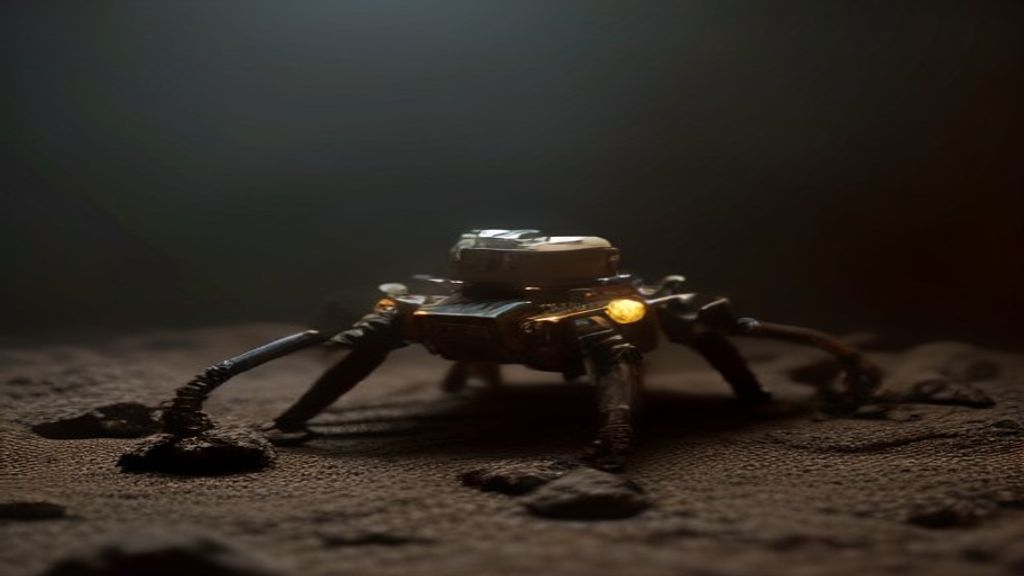
According to reports from the World Health Organization, more than one billion people—approximately 16 percent of the global population—live with some form of physical disability. For many, these conditions impose severe constraints on mobility, communication, and overall independence. Bridging this gap requires more than just clinical intervention; it demands a synergy of advanced embedded systems, machine learning, and creative mechanical design.
At the Regeneron International Science and Engineering Fair (ISEF) held in Phoenix, three remarkable high school students proved that the next generation of engineers is already solving these complex problems. By designing systems that translate neural impulses, decode facial gestures, and cross hazardous terrains, these young innovators secured the prestigious IEEE Presidents' Scholarship awards. Presented by IEEE President Mary Ellen Randall, these accolades recognize an exceptional grasp of electrical engineering, computer science, and assistive robotics. For embedded developers, robotics enthusiasts, and DIY makers, their award-winning projects offer invaluable technical lessons in low-cost system design, sensor integration, and mathematical locomotion control.
The Intersection of Empathy and Engineering
Tonguage: A Computer-Vision HMI Built for Universal Access
Sophomore Hollie Tang secured the first-place $10,000 scholarship for her project, Tonguage—a non-invasive, computer-vision-based human-machine interface (HMI). While existing assistive devices often rely on intrusive physical sensors or highly expensive proprietary hardware, Tang's objective was to build an accessible system using readily available consumer electronics.
The core architecture of Tonguage utilizes a standard, low-cost laptop webcam to track facial cues, converting tongue movements and eye blinks into digital commands. Within this HMI environment, the user's tongue serves as a highly responsive directional cursor, while quick blinks act as standard mouse clicks. By analyzing localized facial movements in real-time, the software maps these physical gestures into actionable commands for operating computers, smart home devices, or motorized wheelchairs.
Safety is a primary concern for any physical assistive navigation system. To prevent dangerous command errors caused by environmental noise or background motion, Tang integrated a facial-tracking security routine. This routine locks onto the primary user's face, disregarding any secondary faces or moving objects that enter the camera's field of view. Beyond basic navigation, Tang designed the platform to support recreational activities like gaming. By prioritizing accessible, camera-based control, Tonguage demonstrates how elegant software engineering can eliminate the need for expensive hardware, making life-changing technology available to users of all socioeconomic backgrounds.
NeuroGait: Deep Learning and Soft Robotics in a Low-Cost Exoskeleton
The second-place award went to high school junior Partap Sidhu for NeuroGait, an innovative mind-controlled lower-limb exoskeleton. Inspired by his volunteer work at a local community center that lacked elevators—forcing mobility-impaired individuals to struggle with stairs—Sidhu engineered a highly functional, active walking aid on an exceptionally tight budget.
The control loop of NeuroGait is built on detecting the Bereitschaftspotential (BP), a subtle pre-motor readiness potential in the brain that appears one to two seconds before a person consciously decides to move. To capture these faint electrical signals, the system employs a custom electroencephalogram (EEG) headset. The raw neural data is streamed to a convolutional neural network (CNN) running on an embedded platform, which classifies intended movements with a remarkable 99.9% accuracy. Once classified, the system commands the physical exoskeleton to actuate, operating with a cumulative real-world execution accuracy of 95.2% over extensive trials.
Unlike commercial exoskeletons that utilize heavy, rigid, and expensive electric motors, NeuroGait relies on 3D-printed pneumatic artificial muscles (PAMs). These soft actuators operate on compressed air, mimicking the natural compliance and physical limitations of human muscles. This bio-inspired design prevents joint overextension and ensures wearer comfort. Perhaps the most staggering aspect of NeuroGait is its cost: Sidhu built the entire functional prototype for just $276, presenting a massive contrast to commercial clinical exoskeletons which routinely retail between $40,000 and $100,000. It stands as a brilliant example of how makers can leverage modern soft robotics and machine learning to democratize medical technology.
Math Into Motion: Navigating Treacherous Terrain via Hexapod Locomotion
Third-place winner Calvin Shang Hung addressed disaster relief and search-and-rescue operations with his project, Math Into Motion: Robotic Hexapod for Hazardous Environments. Inspired by watching planetary rovers struggle on uneven terrain, Hung set out to design a stable, insect-like six-legged robot capable of navigating unstable disaster zones where traditional wheeled systems fail.
The hexapod relies on a stable tripod walking gait, where three legs remain grounded to maintain a solid center of gravity while the other three advance. This continuous three-point contact allows the robot to cross collapsed structures or rubble to locate survivors or deliver payload supplies like insulin to isolated areas. To achieve smooth, reliable leg movement without prior formal electronics experience, Hung had to teach himself the fundamentals of 3D modeling, PCB layout, micro-soldering, and advanced robotics mathematics. The hexapod's control algorithm relies on three core mathematical pillars:
- Inverse Kinematics: This translates the target 3D Cartesian coordinates of each footpad into the precise, real-time angular positions required by the joint servo motors.
- Linear Interpolation: By breaking down large spatial translations into a series of micro-steps, the controller eliminates jerky movement patterns, protecting the servo gears and chassis from mechanical wear.
- Euclidean Transformations: This math adjusts coordinate systems on the fly, ensuring that legs facing different physical orientations still move in a unified, coherent direction relative to the robot's main chassis.
Hung's development process was a lesson in engineering resilience. After seven months of prototyping, a critical power-routing failure in his third-generation PCB destroyed the control board. Instead of quitting, Hung simplified the system layout, redesigned the PCB, and successfully built a fourth version that walked flawlessly across his living room. His experience proves that a structured, iterative approach combined with clear mathematical frameworks can overcome initial deficits in engineering experience.
Key Takeaways for Embedded Developers and Robotics Makers
The success of these three young innovators highlights several crucial principles for modern hardware developers and embedded engineers:
- Software Over Hardware Constraints: Projects like Tonguage show that utilizing advanced software, such as real-time computer vision and facial tracking, can transform standard, low-cost sensors into high-fidelity control interfaces.
- Compliant Actuation in Human-Centric Systems: As demonstrated by NeuroGait, the future of wearable robotics lies in soft, compliant actuators like pneumatic muscles rather than rigid, heavy motors. This approach reduces overall system cost while prioritizing user safety.
- Resilient Prototyping: The iterative journey of building complex systems like a robotic hexapod highlights that hardware failures are a natural part of the design cycle. Simplifying architectures and focusing on robust PCB design are essential steps in bringing a concept to life.
By blending technical mastery with empathy, these young creators have developed solutions that challenge the paradigms of modern assistive technology. For the maker community, their achievements serve as an inspiring blueprint for what can be achieved when engineering is applied to solving real-world human challenges.
About EDATA SL
EDATA SL shares practical electronics, embedded systems, Arduino, ESP32, Raspberry Pi, IoT, repair guides, DIY projects and technical news for engineers, students and makers.
Original news rewritten with AI for educational purposes.


0 comments:
Post a Comment