Published August 13, 2026
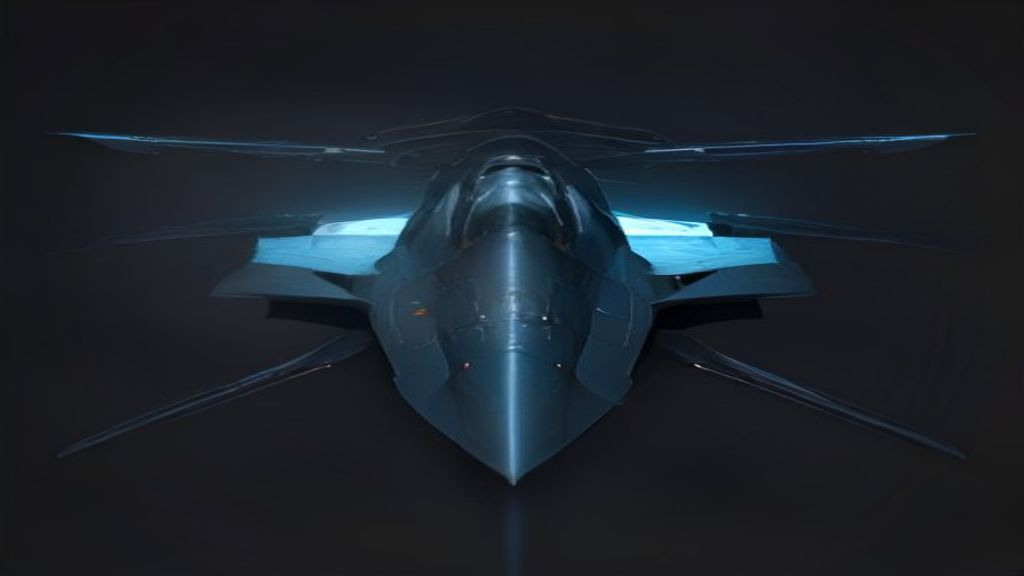
In the high-stakes arena of aerospace engineering, autonomy is transitioning from pre-programmed path-following to dynamic, real-time decision-making. Lockheed Martin’s legendary advanced-projects division, Skunk Works, recently reached a significant milestone by demonstrating AI-driven, sensor-driven autonomy on a fighter aircraft. Utilizing a simulation test aircraft as a surrogate, this demonstration highlights how advanced sensor fusion and artificial intelligence can cooperate to pilot high-performance aircraft through complex scenarios without human intervention.
For embedded systems engineers, robotics developers, and IoT specialists, this milestone is more than just an aerospace achievement. It represents a masterclass in edge computing, real-time data processing, and safety-critical system architecture. Let’s dive deep into the technology behind sensor-driven autonomy, the hardware challenges of airborne AI, and what these developments mean for the wider electronics community.
What is Sensor-Driven Autonomy?
Traditional autopilot and early autonomous flight systems relied heavily on predetermined waypoints, GPS coordinates, and pre-calculated flight paths. While highly effective in controlled environments, these systems struggle when faced with unpredictable, dynamic variables—such as sudden obstacles, weather changes, or electronic interference.
Sensor-driven autonomy shifts the paradigm. Instead of executing a rigid set of instructions, the autonomous agent continuously ingests live data from an array of on-board sensors, builds a real-time model of its environment, and makes pilot-like operational decisions on the fly. In the context of Lockheed Martin’s demonstration, the AI system did not merely follow a flight plan; it reacted to simulated environmental inputs, showcasing a closed-loop system where perception directly drives control actions.
The Embedded Stack: Sensor Fusion and Edge AI
To achieve sensor-driven autonomy, an aircraft must process massive volumes of data with ultra-low latency. This requires a sophisticated embedded hardware stack designed for high throughput and extreme reliability. While the specific hardware configurations of Skunk Works projects are proprietary, the underlying architecture of such systems relies on several key technologies:
- Sensor Fusion Engines: Data from radar, LiDAR, infrared cameras, and inertial measurement units (IMUs) must be synthesized. Sensor fusion algorithms align these disparate data streams in time and space, filtering out noise and providing the AI model with a single, highly accurate state representation.
- Edge AI Accelerators: Sending data to the cloud for processing is out of the question in tactical flight scenarios due to latency and security risks. Autonomous fighter aircraft rely on ruggedized, high-performance edge computing units (typically featuring advanced FPGAs, Tensor Processing Units, or specialized GPUs) to run deep learning inference models locally.
- Real-Time Operating Systems (RTOS): The flight control system must operate deterministically. An RTOS guarantees that critical tasks—such as attitude correction and collision avoidance—are executed within strict microsecond windows, ensuring that AI-driven decisions do not cause control loop instability.
The Crucial Role of Simulation and Surrogate Aircraft
Deploying untested AI models directly onto a multi-million-dollar fighter jet poses unacceptable safety and financial risks. To bridge the gap between digital design and physical flight, Lockheed Martin utilized a simulation test aircraft.
This approach involves running the autonomous flight software on physical, flight-qualified hardware integrated with a highly accurate simulation environment. The system “believes” it is flying in the physical world, reacting to simulated sensor feeds while executing controls that can be monitored by engineers in real time. This Hardware-in-the-Loop (HIL) testing methodology allows developers to stress-test AI models against extreme edge cases, system failures, and complex maneuvers in a safe, controlled environment before transitioning to live-fly testbeds.
Technical Challenges: Determinism vs. Deep Learning
One of the most profound challenges in implementing AI in aerospace is the conflict between deep learning and determinism. Traditional aerospace software must be strictly deterministic; given a specific input, the software must always produce the exact same output. This predictability is central to safety certifications like DO-178C.
Modern neural networks, however, are often viewed as "black boxes." Their decision-making processes are probabilistic rather than rule-based. To overcome this, engineers design hybrid control architectures. In these systems, a high-level AI agent makes strategic decisions (such as route planning or threat evasion), while a traditional, deterministic flight control computer handles the low-level, safety-critical stabilization of the aircraft. If the AI proposes an unsafe maneuver, the deterministic control laws act as a guardrail, overriding the decision to keep the aircraft within safe physical limits.
Why This Matters for Electronics and Robotics Makers
The engineering methodologies proven in military aerospace programs like Lockheed Martin’s Skunk Works invariably trickle down to commercial and hobbyist electronics. The principles demonstrated in this fighter jet test are directly applicable to:
- Autonomous UAVs and Drones: Developers working with PX4, ArduPilot, or custom ESP32/Raspberry Pi flight controllers can utilize similar sensor-fusion and edge-AI architectures to create smarter, safer consumer and industrial drones.
- Agricultural and Industrial Robotics: Ground-based autonomous vehicles rely on identical closed-loop, sensor-driven systems to navigate fields, warehouses, and factories.
- Edge AI Development: As low-power AI microcontrollers (like the STM32 series with neural network accelerators) become more accessible, makers can implement localized, real-time decision-making in compact, budget-friendly DIY projects.
Conclusion
Lockheed Martin’s successful demonstration of AI sensor-driven autonomy on a simulation test aircraft is a powerful indicator of the future of aviation. By proving that artificial intelligence can dynamically interpret and react to sensor data in real time, Skunk Works is paving the way for a new era of manned-unmanned teaming and fully autonomous aerospace systems. For the broader electronics community, it serves as an inspiring showcase of what can be achieved when advanced sensor technology, high-speed edge computing, and robust software engineering converge.


0 comments:
Post a Comment