Published: August 30, 2026
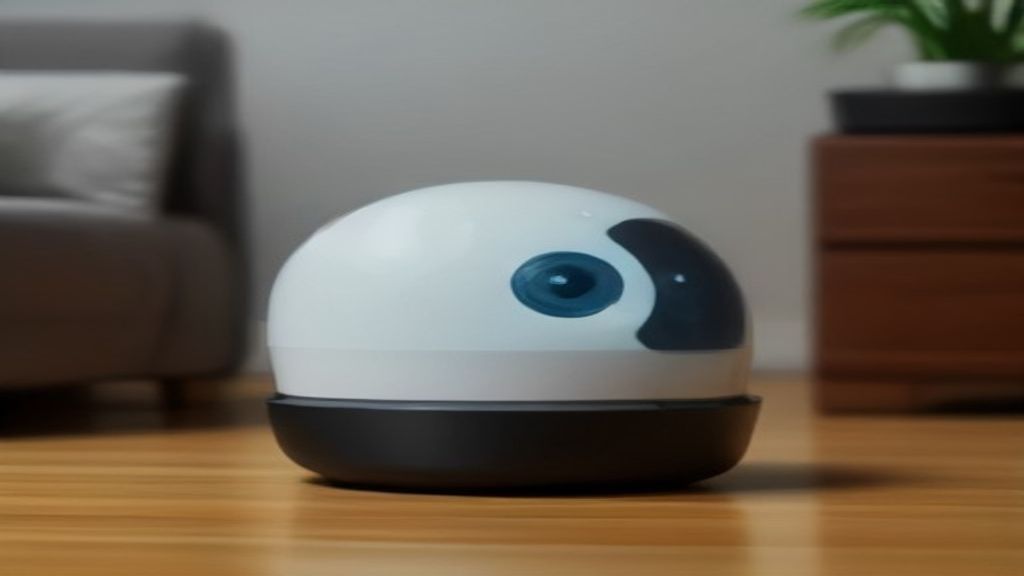
Back in the late 2010s, the tech world witnessed the first major wave of consumer companion robots. Armed with rudimentary speech recognition, cute faces, and basic mobile bases, these machines promised to bring the future of sci-fi into our living rooms. Yet, for many early adopters, the magic quickly faded. Once the novelty of simple voice commands wore off, these devices often ended up gathering dust on shelves. Worse still, when several pioneering robotics startups folded, they took their cloud servers down with them, rendering expensive hardware completely non-functional overnight. For users who had begun to bond with these machines, it felt less like a server outage and more like losing a household pet.
Today, a quiet revolution is taking place in human-robot interaction (HRI). The industry is moving away from hyper-reactive, cloud-dependent voice assistants toward what pioneers call "gentle intelligence." Instead of waiting passively for a wake word or trying to mimic human anatomy with uncanny realism, modern companion robots are designed to establish a continuous, unobtrusive background presence. They do not just execute commands; they adapt to the daily rhythms of a home. This shift requires a massive overhaul of the underlying embedded hardware, sensory systems, and edge-processing architectures.
The Evolution of Social Robotics: From Gimmicks to Genuine Presence
Inside the Hardware: Edge Computing and the "Heart Module"
One of the primary failure points of early companion robots was their reliance on continuous, high-bandwidth cloud connectivity for basic inference tasks. If the local Wi-Fi lagged or the company's backend servers experienced latency, the robot's conversational flow stalled, breaking the illusion of life. To resolve this, next-generation platforms like the OlloNi SS1 by Ollobot shift the heavy lifting of artificial intelligence directly to local silicon.
The system's internal architecture features a dedicated onboard processor called the "heart module," paired with 16 GB of system memory and 64 GB of local storage. By hosting visual perception, acoustic modeling, and decision-making state machines entirely on-device, the robot can achieve ultra-low latency response times. More importantly, this localized compute paradigm ensures that sensitive household data—such as high-definition video feeds, room layouts, and daily activity logs—remains securely inside the home's local network rather than being streamed to third-party cloud platforms.
Operating on an Android-based OS, the system is built to receive over-the-air (OTA) firmware updates. This allows developers to continuously optimize motor control profiles, visual models, and battery performance, transforming the hardware into an evolving platform that matures alongside its environment.
Multi-Sensor Fusion and Autonomous Mobility
To navigate and interact with a dynamic household environment, modern companion robots rely on a complex array of sensor systems operating in parallel:
- Advanced Vision Modules: A multi-chip, AI-accelerated 4K camera module handles real-time facial identification, motion tracking, and behavioral event detection. Recognizing that software-level privacy toggles can leave users feeling uneasy, engineers have integrated a mechanical, physical shutter over the camera lens, offering an absolute hardware-level privacy guarantee.
- Far-Field Acoustic Sensing: An integrated six-microphone array provides omnidirectional audio capture up to a range of five meters. This configuration utilizes advanced beamforming and noise-reduction algorithms to isolate human speech from ambient domestic sounds like televisions or washing machines.
- Locomotion and Kinematics: Instead of being tethered to a single room, these robots feature mobile bases capable of traversing common indoor flooring types, including hardwood, ceramic tile, and low-pile carpeting. With the ability to scale inclines of up to 3.5 degrees, the physical drive system relies on high-torque, quiet motors that allow the robot to transition smoothly between spaces without disrupting the home's peace.
By constantly fusing data from these sensors, the robot can transition from a reactive model (waiting for "Hey Robot") to a proactive model. For instance, if the visual system detects an elderly resident slipping or falling, or if the behavioral model flags an unusual period of silence during a time normally reserved for activity, the system can autonomously initiate safety check-ins or alert remote family members.
The "2+1" Display Configuration and Emotional UI
In social robotics, how a machine presents information is just as critical as how it processes data. A standard tablet glued to a mobile base often feels cold and transactional. To bridge this emotional gap, modern companion systems are experimenting with multi-display form factors.
The OlloNi SS1, for example, utilizes a unique "2+1" display configuration. It splits its user interface into distinct cognitive channels:
- Two Circular Side Displays: These function exclusively as expressive, non-verbal "eyes." By manipulating simple shapes, blinking speeds, and tracking movements, the robot can communicate attention, curiosity, confusion, or warmth without relying on spoken dialogue.
- A Central Primary Screen: This display handles transactional and informational UI, such as system settings, video calls, reminders, and interactive media.
By decoupling emotional expression from functional data presentation, the robot can maintain a friendly, lifelike presence even while displaying complex interfaces or system diagnostics. This reduces the cognitive load on the user and makes interactions feel far more organic.
Local AI Vlogging: Capturing Life Without the Cloud
Another fascinating application of high-performance edge processing is automated life-recording. Rather than requiring family members to constantly pull out smartphones to record spontaneous moments, the robot's local vision pipeline can detect indicators of positive human interaction, such as smiles, laughter, or group proximity.
Once a set of raw clips is gathered, an on-device AI video compilation engine automatically sequences, crops, and soundtracks the clips into short-form daily vlogs. Because all editing and rendering occur locally on the internal storage, families can preserve these candid domestic memories without worrying about private video files leaving their local network.
Power Management and Long-Term Coexistence
For an AI companion to truly integrate into a home, it must be available throughout the day. Designing a mobile platform that can run continuous vision and audio processing pipelines while maintaining reasonable battery life is a monumental engineering challenge.
Modern power-management microcontrollers solve this by implementing aggressive sleep states and dynamic clock gating. When the household is quiet or asleep, the primary processor scales down, leaving only the low-power acoustic wake-word circuitry and motion sensors active. This architecture allows for up to 12 hours of standby time, or approximately 5 hours of continuous active engagement (including navigation, screen rendering, and visual tracking) on a single charge cycle.
A New Paradigm for Robotics Developers
For the embedded engineers, IoT developers, and hobbyists building the next wave of smart devices, platforms like the OlloNi SS1 demonstrate that the future of robotics lies in "presence rather than utility." The goal is no longer to build a mechanical humanoid that washes the dishes, but rather to design an ambient, intelligent node within the home ecosystem that provides comfort, safety, and seamless communication.
By prioritizing robust local processing, elegant sensor fusion, and thoughtful physical industrial design, the robotics community is finally building machines that don't just sit on shelves—they become a natural part of our lives.
About EDATA SL
EDATA SL shares practical electronics, embedded systems, Arduino, ESP32, Raspberry Pi, IoT, repair guides, DIY projects and technical news for engineers, students and makers.
Original news rewritten with AI for educational purposes.


0 comments:
Post a Comment