Electronic circuit, componnent data, lesson and etc….: DIY Electronics
Showing posts with label DIY Electronics. Show all posts

Design a Concealed Magnetic Gesture Lock Using Teensy 4.1 and Hall Sensor Grids

Published: October 27, 2026


Concealed security mechanisms have long captivated embedded systems designers and security enthusiasts alike. Traditional hidden locks typically depend on single-point magnetic reed switches or subterranean RFID readers. However, these classical implementations suffer from inherent vulnerabilities. Reed switches can be bypassed instantly by sweeping any strong neodymium magnet across the enclosure surface once its position is identified. On the flip side, active RFID modules require specific plastic apertures and remain susceptible to detection via standard high-frequency electromagnetic field scanners.

By leveraging modern high-speed spatial sensing arrays, developers can elevate covert lock mechanisms beyond primitive proximity detection. Implementing a dynamic magnetic gesture reader creates an interactive biometric-style security layer that relies not just on the presence of a magnetic field, but on a precise, secret spatial trajectory executed across a localized sensor grid.

Reinventing Electromechanical TV: Build a Portable 4K-Wide Screen Using Raspberry Pi Pico

Published: September 03, 2026


Reinventing Electromechanical TV: Build a Portable 4K-Wide Screen Using Raspberry Pi Pico

In the pantheon of television history, the electromechanical systems of the 1920s often feel like a bizarre, steam-punk detour. Developed by pioneers like John Logie Baird, these early systems relied on spinning disks with spiral patterns of pinholes—known as Nipkow disks—to sweep a light beam across a viewing area. While quickly eclipsed by cathode-ray tubes (CRTs) in the 1940s, electromechanical television remains a fascinating frontier for modern hardware hackers, retro-tech enthusiasts, and embedded developers.

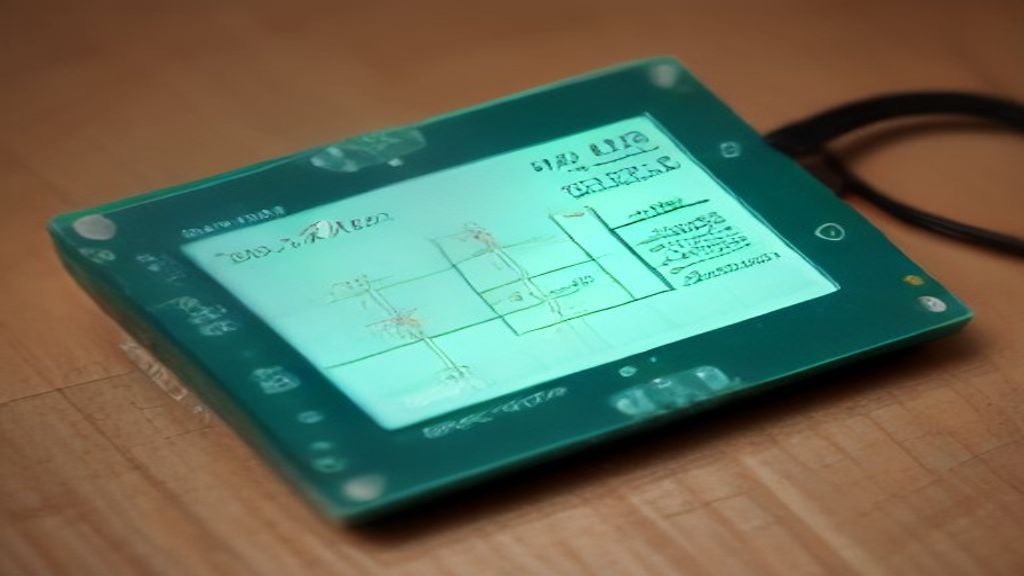
Today, electromechanical displays have found a second life among makers, embedded engineers, and retro-computing enthusiasts. While many recreate these systems as desktop-sized curiosities using vinyl records or large acrylic disks, a brilliant project called the Scanwheel demonstrates how modern technology can shrink this hardware into a pocket-sized form factor. By utilizing a 3D-printed drum instead of a disk, high-speed LEDs, and the powerful Raspberry Pi Pico, this portable device achieves an astonishing horizontal resolution of over 4,000 pixels on a 20-line display.

Reinventing Electromechanical TV: Build a Portable Nipkow Drum Display with Raspberry Pi Pico

Published: August 29, 2026


Reinventing Electromechanical TV: Build a Portable Nipkow Drum Display with Raspberry Pi Pico

While modern display technologies focus on pushing the boundaries of high-refresh-rate OLEDs and micro-LED panels, there is a distinct, nostalgic charm in looking backward to the absolute origins of video transmission. Long before cathode-ray tubes (CRTs) dominated living rooms, the earliest television systems were purely electromechanical. Today's makers and embedded engineers are breathing new life into these century-old visual concepts, upgrading them with modern microcontrollers, 3D printing...

Building a Widescreen 4K-Horizontal Mechanical TV with the Raspberry Pi Pico

Published: August 28, 2026


Building a Widescreen 4K-Horizontal Mechanical TV with the Raspberry Pi Pico

While high-refresh-rate OLED panels and dense micro-LED screens dominate modern display tech, retro-engineering often provides the most fascinating design challenges. A compelling example is the "Scanwheel"—a pocket-sized, widescreen electromechanical television that turns classic 1920s display concepts on their head. Boasting an unconventional resolution of 4,096 by 20 pixels, this DIY device merges historical hardware concepts with modern microcontrollers, specifically leveraging the unique architecture of the Raspberry Pi Pico.

To understand how this pocket-sized display functions, we must look back to the origins of broadcasting. In the 1920s, pioneer John Logie Baird demonstrated the first functional television systems using the Nipkow disk. This design featured a flat, spinning disc perforated with a spiral pattern of tiny pinholes. As the disc rotated, each hole swept across a light source, tracing out individual scan lines. By precisely modulating the brightness of the light in sync with the rotation, a full visual image emerged due to the persistence of vision (POV).

Build a Portable Widescreen Mechanical TV Using Raspberry Pi Pico PIO

Published: August 27, 2026


Build a Portable Widescreen Mechanical TV Using Raspberry Pi Pico PIO

Electromechanical television might seem like an ancient relic of the 1920s, but modern embedded hardware is breathing new, high-resolution life into this century-old technology. Originally pioneered by John Logie Baird, early television systems relied on physical spinning disks to scan and reconstruct visual images. Today, maker and developer communities are taking these foundational concepts and redesigning them for the microchip era.

The Scanwheel is a prime example of this retro-futuristic fusion. It is a pocket-sized, wide-screen electromechanical display boasting an unconventional resolution of 4,096 by 20 pixels. By replacing the classic Nipkow disk with a highly optimized Nipkow drum and driving the system with a Raspberry Pi Pico, this project pushes the boundaries of spatial display technology using everyday maker tools.

Inspiring Assistive Tech: Teen Innovators Secure IEEE Presidents’ Scholarship Awards

Published: August 23, 2026


Inspiring Assistive Tech: Teen Innovators Secure IEEE Presidents’ Scholarship Awards

According to data compiled by the World Health Organization, more than one billion people—roughly 16 percent of the global population—live with some form of disability. Many of these conditions severely restrict personal mobility and autonomy. Addressing these immense challenges requires fresh perspectives, and some of the most exciting solutions are emerging from the next generation of hardware developers and makers.

At the recent Regeneron International Science and Engineering Fair (ISEF) in Phoenix, the spotlight shone on three high school students whose highly sophisticated engineering projects aim to restore independence, translate neurological signals into motion, and navigate unstable environments. Their remarkable achievements earned them the prestigious IEEE Presidents' Scholarship awards, presented by IEEE President Mary Ellen Randall.

Teen Innovators Redefine Assistive Tech and Robotics at IEEE Presidents' Scholarship

Published: August 20, 2026


Teen Innovators Redefine Assistive Tech and Robotics at IEEE Presidents' Scholarship

According to estimates by the World Health Organization, more than one billion people worldwide—roughly 16 percent of the global population—live with some form of physical or cognitive disability. For many of these individuals, simple daily tasks and independent mobility remain significant challenges. At the recent Regeneron International Science and Engineering Fair (ISEF) in Phoenix, three brilliant high school students showcased remarkable engineering prototypes designed to restore autonomy, bridge communication gaps, and assist in critical rescue missions.

Their exceptional work earned them the prestigious IEEE Presidents’ Scholarship awards. Presented by IEEE President Mary Ellen Randall, these accolades honor high schoolers who demonstrate an elite understanding of electrical engineering, computer science, and embedded systems. In addition to financial scholarships, the recipients received complimentary IEEE student memberships and the coveted IEEE President's coin. For these young engineers, the recognition validates months of rigorous debugging, mathematical modeling, and hardware prototyping.

Teen Innovators Win IEEE Presidents' Scholarship with Groundbreaking Assistive Tech and Robotics Projects

Teen Innovators Win IEEE Presidents' Scholarship with Groundbreaking Assistive Tech and Robotics Projects

Published: August 19, 2026


Teen Innovators Win IEEE Presidents' Scholarship with Groundbreaking Assistive Tech and Robotics Projects

Bridging the Gap in Assistive Technology Through DIY Engineering

According to data from the World Health Organization, more than one billion people worldwide live with some form of physical or cognitive disability. For many of these individuals, challenges with mobility and motor control significantly restrict their daily independence. While commercial assistive technologies exist, their prohibitive costs often put them far out of reach for average families.

At the Regeneron International Science and Engineering Fair (ISEF) held in Phoenix, Arizona, three high school developers demonstrated how consumer-grade microcontrollers, open-source machine learning, and creative mechanical designs can revolutionize assistive care. Recognizing their achievements, IEEE President Mary Ellen Randall awarded these young innovators the prestigious IEEE Presidents' Scholarship. Their projects prove that complex biomedical and robotic solutions can be built affordably using accessible, garage-lab methodologies.

1. Project "Tonguage": A Computer-Vision HMI for Hands-Free Control

For individuals living with severe motor impairments, such as quadriplegia, interacting with computers or operating motorized wheelchairs is an ongoing challenge. High school sophomore Hollie Tang developed Tonguage, a non-invasive, vision-based human-machine interface (HMI) designed to restore digital and physical autonomy.

Rather than relying on expensive eye-tracking systems or invasive implants, Tonguage processes real-time video signals from a standard, low-cost laptop webcam. The system maps the user\'s face and tracks subtle movements of the tongue and eyes. Tang\'s software uses these inputs to emulate peripheral devices:

  • Directional Cursor Control: The physical position and motion vectors of the user\'s tongue act as an analog joystick.
  • Click Interactions: Intentional eye blinks are filtered and translated into left- and right-mouse clicks.

To make the system viable for real-world applications like wheelchair navigation, safety was a paramount design requirement. Tang implemented an active face-tracking filter that locks onto the primary user. If a bystander moves into the camera\'s field of view, the system ignores the secondary facial landmarks, preventing erratic or dangerous navigation commands. By optimizing the computer-vision pipeline to run on consumer hardware, Tang ensured her solution remains highly accessible regardless of a user\'s socioeconomic status.

2. NeuroGait: The $276 Mind-Controlled Exoskeleton

Commercial lower-limb exoskeletons are marvels of modern engineering, but their retail prices generally range from $40,000 to over $100,000. High school junior Partap Sidhu set out to disrupt this market by designing NeuroGait, a functional, brain-controlled exoskeleton built for a mere $276.

The engineering behind NeuroGait is exceptionally sophisticated. The system relies on predicting movement before it physically occurs by monitoring the brain\'s electrical activity. Here is how the signal chain operates:

  1. Signal Acquisition: A custom-built electroencephalogram (EEG) headset monitors the motor cortex, searching specifically for the Bereitschaftspotential (BP), or readiness potential. This faint electrical signal manifests in the brain roughly one to two seconds before a person consciously initiates movement.
  2. Pattern Recognition: The raw EEG data is fed into a localized Convolutional Neural Network (CNN). In testing, the CNN achieved an astonishing 99.9% accuracy in classifying motor intentions.
  3. Actuation: Once a movement intention is classified, the system sends a command to the physical exoskeleton.

To avoid the weight and rigidity of heavy electric motors, Sidhu opted for soft robotics. NeuroGait utilizes custom-designed pneumatic artificial muscles (PAMs). These 3D-printed actuators contract when pressurized, closely mimicking the natural compliance and biomechanics of human muscle tissue. Across 500 trials, the end-to-end system maintained a physical control accuracy of 95.2%, offering a glimpse into the future of low-cost neuro-prosthetics.

3. Math Into Motion: A Rugged Search-and-Rescue Hexapod

When natural disasters strike, navigating collapsed buildings or unstable debris is highly hazardous for human rescue teams and conventional wheeled rovers. Sophomore Calvin Shang Hung addressed this challenge with his project, Math Into Motion: Robotic Hexapod for Hazardous Environments.

Hung designed a six-legged robot capable of maintaining a highly stable tripod gait, where three legs remain firmly on the ground while the other three transition forward. To coordinate the complex movement of eighteen individual joints (three per leg), Hung taught himself advanced mathematical models and embedded programming:

  • Inverse Kinematics (IK): Computes the precise angular rotation required for each joint servo to position the foot at a specific coordinate in 3D space.
  • Linear Interpolation: Smoothes out the transitions between steps, reducing physical vibration and mechanical stress.
  • Euclidean Transformations: Translates global directional vectors into localized leg movements, allowing the robot to change directions seamlessly regardless of its chassis orientation.

The journey was not without hardware setbacks. During development, a catastrophic short circuit destroyed the third version of his custom printed circuit board (PCB). Instead of abandoning the project, Hung simplified the system architecture, redesigned the PCB power plane, and successfully built a fourth version that walked flawlessly. The hexapod is designed to carry payload sensors to locate survivors or transport medicine in active disaster zones.

Key Takeaways for Embedded Developers and Makers

The achievements of these three student developers highlight a profound shift in the electronics and robotics landscapes. Advanced features like computer-vision interfaces, convolutional neural networks for biosignal analysis, and multi-axis inverse kinematics are no longer restricted to university laboratories.

By leveraging rapid prototyping tools, 3D printing, and accessible programming platforms, developers of all ages can design highly impactful, empathetic technological solutions that solve real-world human problems.


About EDATA SL

EDATA SL shares practical electronics, embedded systems, Arduino, ESP32, Raspberry Pi, IoT, repair guides, DIY projects and technical news for engineers, students and makers.


Original news rewritten with AI for educational purposes.

Teen Innovators Win IEEE Presidents’ Scholarship with Groundbreaking Assistive Tech and Robotics

Teen Innovators Win IEEE Presidents’ Scholarship with Groundbreaking Assistive Tech and Robotics

According to the World Health Organization, more than one billion people—approximately 16 percent of the global population—live with some form of disability. For many of these individuals, everyday tasks, mobility, and independence remain significant challenges. While industrial solutions exist, they are often prohibitively expensive and inaccessible to those who need them most. At the recent Regeneron International Science and Engineering Fair (ISEF) in Phoenix, three brilliant high school students showcased how low-cost embedded systems, computer vision, and robotics can break down these barriers. Their exceptional projects earned them the prestigious IEEE Presidents’ Scholarship, presented by IEEE President Mary Ellen Randall.

Unlocking Genetics: Building an Iris Color Detection System with Raspberry Pi

Published August 17, 2026

Unlocking Genetics: Building an Iris Color Detection System with Raspberry Pi

Redefining the Drawing Machine: A DIY Delta Pen Plotter with an Automatic Tool Changer

Published August 16, 2026

Redefining the Drawing Machine: A DIY Delta Pen Plotter with an Automatic Tool Changer

Beyond the Cartesian Grid: A Fresh Take on Plotting

Raspberry Pi Book of Making 2027: A Blueprint for Next-Generation Embedded Projects

Published August 14, 2026

Raspberry Pi Book of Making 2027: A Blueprint for Next-Generation Embedded Projects

Expanding Horizons: How to Leverage LoRa Add-on Boards for Long-Range Raspberry Pi Projects

Published August 10, 2026

Expanding Horizons: How to Leverage LoRa Add-on Boards for Long-Range Raspberry Pi Projects

Bridging the Distance Gap in Wireless IoT

Edge AI Made Accessible: Raspberry Pi Press Releases 'AI Projects with Raspberry Pi'

Edge AI Made Accessible: Raspberry Pi Press Releases 'AI Projects with Raspberry Pi'

The integration of artificial intelligence and machine learning into the maker movement has transitioned from a futuristic concept to an everyday reality. No longer confined to massive cloud data centers or high-power desktop GPUs, intelligent systems are increasingly operating directly at the network edge. Recognizing this massive shift, Raspberry Pi Press has officially launched its newest publication: AI Projects with Raspberry Pi.

The Curiously Minty Cyberdeck: Engineering a Pocket-Sized Terminal in an Altoids Tin

The Curiously Minty Cyberdeck: Engineering a Pocket-Sized Terminal in an Altoids Tin

Build a Pocket Route Finder with Raspberry Pi Pico and Dijkstra’s Algorithm

Published August 09, 2026

Build a Pocket Route Finder with Raspberry Pi Pico and Dijkstra’s Algorithm

Empowering Grassroots Innovation: How Uzbekistan's Yadro Team is Redefining Youth Robotics

Published August 08, 2026

Empowering Grassroots Innovation: How Uzbekistan's Yadro Team is Redefining Youth Robotics

In the rapidly evolving landscape of embedded systems and robotics, some of the most profound breakthroughs do not originate from multi-million-dollar corporate laboratories. Instead, they emerge from the raw curiosity and persistent experimentation of young makers working in small, community-driven workshops. A prime example of this phenomenon is the Yadro Team, an inspiring group of eight young robotics inventors based in Uzbekistan. Composed mostly of individuals under the age of 20, this team is proving that restricted resources are no barrier to creating sophisticated, meaningful technology.

Driving Innovation: How Uzbekistan's Yadro Team is Redefining DIY Robotics

Driving Innovation: How Uzbekistan's Yadro Team is Redefining DIY Robotics

The Democratization of Hardware: Innovation Beyond Traditional Labs

Empowering Innovation: How Uzbekistan's Yadro Team is Redefining Open-Source Robotics

Empowering Innovation: How Uzbekistan's Yadro Team is Redefining Open-Source Robotics

Related Posts Plugin for WordPress, Blogger...