Published: September 03, 2026
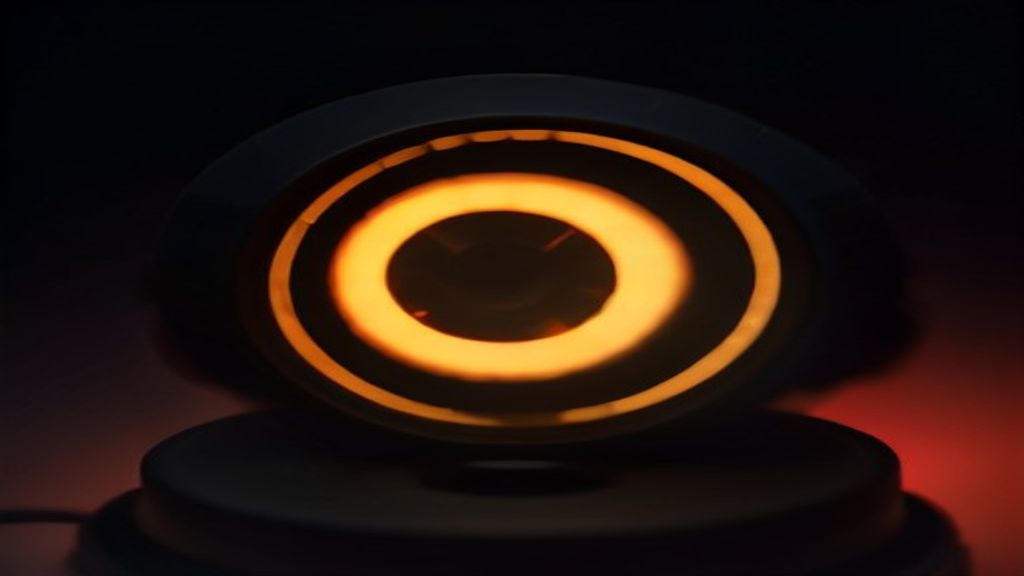
In the pantheon of television history, the electromechanical systems of the 1920s often feel like a bizarre, steam-punk detour. Developed by pioneers like John Logie Baird, these early systems relied on spinning disks with spiral patterns of pinholes—known as Nipkow disks—to sweep a light beam across a viewing area. While quickly eclipsed by cathode-ray tubes (CRTs) in the 1940s, electromechanical television remains a fascinating frontier for modern hardware hackers, retro-tech enthusiasts, and embedded developers.
Today, electromechanical displays have found a second life among makers, embedded engineers, and retro-computing enthusiasts. While many recreate these systems as desktop-sized curiosities using vinyl records or large acrylic disks, a brilliant project called the Scanwheel demonstrates how modern technology can shrink this hardware into a pocket-sized form factor. By utilizing a 3D-printed drum instead of a disk, high-speed LEDs, and the powerful Raspberry Pi Pico, this portable device achieves an astonishing horizontal resolution of over 4,000 pixels on a 20-line display.
Why the Nipkow Drum Beats the Nipkow Disk
Traditional electromechanical televisions relied on flat, circular Nipkow disks. While simple to construct, disks present major design compromises. First, because the holes are arranged in a spiral pattern on a flat circle, the resulting scan lines are inherently curved. To minimize this distortion and make the viewing window look relatively flat, the disk must have a massive diameter relative to the size of the image. This makes pocket-sized or portable disk-based displays highly impractical.
The Scanwheel overcomes this spatial limitation by pivoting to a Nipkow drum. Instead of a flat disk, a drum utilizes a rotating hollow cylinder. The scanning apertures are pierced along the curved surface of the cylinder in a helical, stair-step arrangement. Because the viewer looks at the drum from the side, each pinhole travels across a straight horizontal path rather than a curved arc. This geometric trick completely eliminates image curvature, allowing developers to align characters or video frames perfectly across a flat horizontal axis.
Furthermore, because the drum curves around a hollow center, it is highly compact. Inside this 6-centimeter-wide 3D-printed cylinder, multiple modern LED light sources can be packed tightly together. This allows for a multi-zone display system that fits comfortably in the palm of your hand, converting what was once a desktop-sized setup into a truly pocketable unit.
Achieving Ultra-High Horizontal Resolution
At first glance, a television with only 20 scan lines sounds incredibly primitive. After all, Baird's earliest commercial broadcasts utilized 30 lines, and standard-definition analog TV required hundreds. However, the vertical resolution of a mechanical TV is strictly limited by the physical number of pinholes on the drum. In the case of the Scanwheel, there are 20 physical holes, yielding 20 vertical lines.
The magic happens along the horizontal axis. In a mechanical system, horizontal resolution is not governed by physical barriers but by the modulation speed of the light source and the processing speed of the driver board. Because modern LEDs can switch states in a fraction of a microsecond, we can modulate the light at incredibly high frequencies as each hole sweeps across the viewing window.
By splitting the physical display space into five distinct LED-driven zones working in tandem, the Scanwheel projects a panoramic display. The onboard frame buffer stores 4,096 horizontal pixels across these 20 lines. In bench tests, the system has even pushed past 8,000 horizontal pixels. The result is a surprisingly crisp, wide-screen display capable of rendering scrolling text, custom UI elements, and even recognizable video frames despite the ultra-low line count.
The Secret Weapon: The RP2040 and PIO Silicon
Driving five separate light sources with sub-microsecond precision while synchronizing them with a physical motor requires precise, deterministic timing. On standard microcontrollers, trying to handle this real-time stream via the main CPU cores would result in visible image jitter. Interrupts, operating system overhead, or minor delay loops in the firmware would easily throw off the microsecond-level timing required for high horizontal resolution.
This is where the Raspberry Pi Pico's RP2040 chip becomes indispensable. The RP2040 features a specialized hardware block known as Programmable Input/Output (PIO). The PIO consists of dedicated state machines that run independently of the dual ARM Cortex-M0+ CPU cores. These state machines execute a very compact, cycle-accurate instruction set designed specifically for high-speed bit-banging and data streaming.
In the Scanwheel architecture, the PIO handles almost all the heavy lifting. It reads raw pixel data directly from the frame buffer in memory and clocks it out to the LEDs at exactly the right physical moments. It even manages the mixed interfaces of the light sources, which include standard monochrome LEDs alongside a multi-channel RGB LED in the center. While the PIO state machines run this lightning-fast display routine, the main CPU is left free to run a MicroPython script. This script handles high-level logistics, such as receiving video data over a network interface and updating the frame buffer, without ever interrupting the physical rendering process.
Motor Synchronization and 3D Printing
For the visual illusion to succeed, the rotational speed of the drum must match the timing of the LED pulses. The Scanwheel achieves this synchronization using a small stepper motor driven by a dedicated motor driver board. Power is supplied directly through the Pico's USB port. The microcontroller sends a control pulse to the driver board once every millisecond, incrementally advancing the drum's physical position in perfect lockstep with the frame buffer readouts.
All structural components of the Scanwheel are designed for 3D printing. The project's public repository includes an OpenSCAD file, allowing makers to parametrically adjust the drum's dimensions. By changing variables in the script, you can easily scale up the drum to accommodate more scan lines, customize the pinhole sizes, or adjust the physical tolerances to match your specific 3D printer.
A Perfect Fusion of Retro and Modern Tech
The Scanwheel is a stellar example of how modern microcontrollers can breathe new life into century-old concepts. By combining the mechanical elegance of the Nipkow drum with the cutting-edge PIO capabilities of the RP2040, this project transforms a bulky, historic novelty into a sleek, pocket-sized display. Whether you construct it as a unique digital clock, an experimental video player, or an educational tool for exploring persistence of vision, the Scanwheel is a rewarding weekend build. It challenges our assumptions about display geometry and serves as an excellent sandbox for mastering real-time embedded programming.
About EDATA SL
EDATA SL shares practical electronics, embedded systems, Arduino, ESP32, Raspberry Pi, IoT, repair guides, DIY projects and technical news for engineers, students and makers.
Original news rewritten with AI for educational purposes.


0 comments:
Post a Comment