Published: September 02, 2026
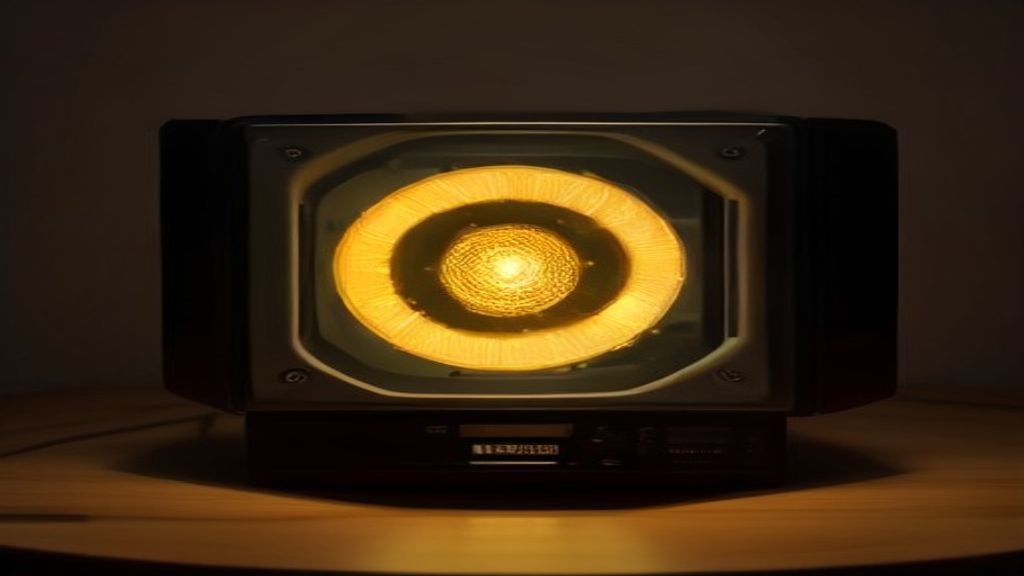
While modern display technology is dominated by ultra-thin OLED panels and high-refresh-rate LCDs, there is an enduring fascination with the electromechanical display systems of the early 20th century. What began as an exploration into unique digital clock designs has evolved into a fascinating engineering project: a pocket-sized, high-resolution mechanical television known as the Scanwheel. This unique DIY project achieves an astonishing horizontal resolution of 4,096 pixels across just 20 physical scan lines, demonstrating how modern microcontrollers can breathe new life into century-old concepts.
Traditional electromechanical televisions, popularized by pioneers like John Logie Baird in the 1920s, relied on a rotating Nipkow disk. This flat plate featured a series of small apertures arranged in a spiral pattern. As the disk spun, each hole swept across a light source, tracing a single horizontal scan line. By modulating the brightness of the light source in synchronization with the disk's rotation, a complete two-dimensional image could be formed due to the persistence of vision.
The Appeal of Electromechanical Displays
From Nipkow Disks to Cylindrical Drums
However, Nipkow disks suffer from a major design bottleneck: to minimize image curvature and distortion, the disk must have a relatively large diameter. This makes portable designs highly impractical. To overcome this limitation, the Scanwheel project utilizes an elegant alternative: the Nipkow drum. By placing the apertures in a helical, stair-step pattern around the curved surface of a rotating cylinder, the light traces a perfectly straight horizontal line from the viewer\'s perspective. This geometric advantage allows the entire mechanism to be shrunk down to a pocket-sized drum just 6 centimeters wide, without introducing visual distortion.
High-Resolution Challenges in Mechanical Systems
In a mechanical television, the vertical resolution is strictly limited by the number of physical apertures on the rotating drum. With only 20 holes, the vertical resolution of the Scanwheel is modest—even lower than Baird\'s historical 30-line broadcasts. However, the horizontal resolution is a completely different story. Because the horizontal resolution is determined by how rapidly the light source can modulate its intensity as each hole sweeps across the viewing window, modern optoelectronics can push this figure to extreme levels.
Using high-speed LEDs, the light output can be modulated at megahertz rates. This allows the system to squeeze 4,096 distinct horizontal pixels into each of the 20 scan lines, creating an ultra-wide, panoramic aspect ratio. In laboratory testing, the hardware has successfully achieved horizontal resolutions exceeding 8,000 pixels. The primary bottleneck is no longer the speed of the light source, but rather the memory capacity of the microcontroller holding the frame buffer.
Leveraging the RP2040\'s Programmable I/O (PIO)
To drive this unique display, the project leverages the Raspberry Pi Pico, powered by the RP2040 microcontroller. Driving a mechanical television requires highly deterministic, nanosecond-level timing. Standard microcontroller CPUs often struggle with these requirements because interrupts, operating system overhead, or standard instruction execution cycles introduce jitter, which ruins the alignment of the visual display.
This is where the RP2040\'s unique Programmable Input/Output (PIO) block becomes indispensable. The PIO consists of independent hardware state machines that execute simple instructions dedicated to I/O operations, entirely separate from the main dual-core ARM Cortex-M0+ processor. The PIO handles the precise timing required to pulse the stepper motor driver and modulate the five separate LED light sources (including an RGB LED for color highlights) exactly as the drum\'s apertures align.
By offloading the high-speed data streaming and hardware synchronization to the PIO, the main CPU remains largely idle. The primary control firmware can be written in high-level MicroPython, which simply sets up the PIO state machines, manages the frame buffers, and steps aside to let the dedicated hardware do the heavy lifting.
System Integration and Firmware
The physical structure of the Scanwheel is designed for simplicity and accessibility. The outer chassis and the internal Nipkow drum are entirely 3D-printable. Power is supplied directly through the Raspberry Pi Pico\'s USB port, which provides enough current to run both the microcontroller and the small stepper motor that spins the drum. A compact driver board steps the motor precisely once every millisecond to maintain a constant, jitter-free rotational speed.
For video delivery, data is streamed directly to the Raspberry Pi Pico over a network interface. The Scanwheel can be configured to act as a secondary monitor or mirror a specific region of a host PC\'s screen. The incoming video frames are packed into a local frame buffer, where the PIO state machines continuously read the pixel values and map them to the corresponding LED channels in sync with the drum\'s physical rotation.
Build and Customize Your Own
For makers, educators, and embedded engineers interested in building their own mechanical TV, the entire Scanwheel project is open-source. The project\'s repository includes all schematic files, firmware, and mechanical designs. Crucially, the 3D models are built using OpenSCAD, a script-based 3D modeler. This allows builders to easily parameterize the drum design—adjusting the diameter, adding more scan lines to increase vertical resolution, or resizing the enclosure to accommodate different motors or LED configurations.
Ultimately, the Scanwheel is a brilliant demonstration of creative engineering. It proves that with the right silicon—like the RP2040\'s PIO—and some modern maker tools, even the most outdated technologies can be reimagined into captivating, educational, and highly functional modern hardware projects.
About EDATA SL
EDATA SL shares practical electronics, embedded systems, Arduino, ESP32, Raspberry Pi, IoT, repair guides, DIY projects and technical news for engineers, students and makers.
Original news rewritten with AI for educational purposes.


0 comments:
Post a Comment