Published: August 29, 2026
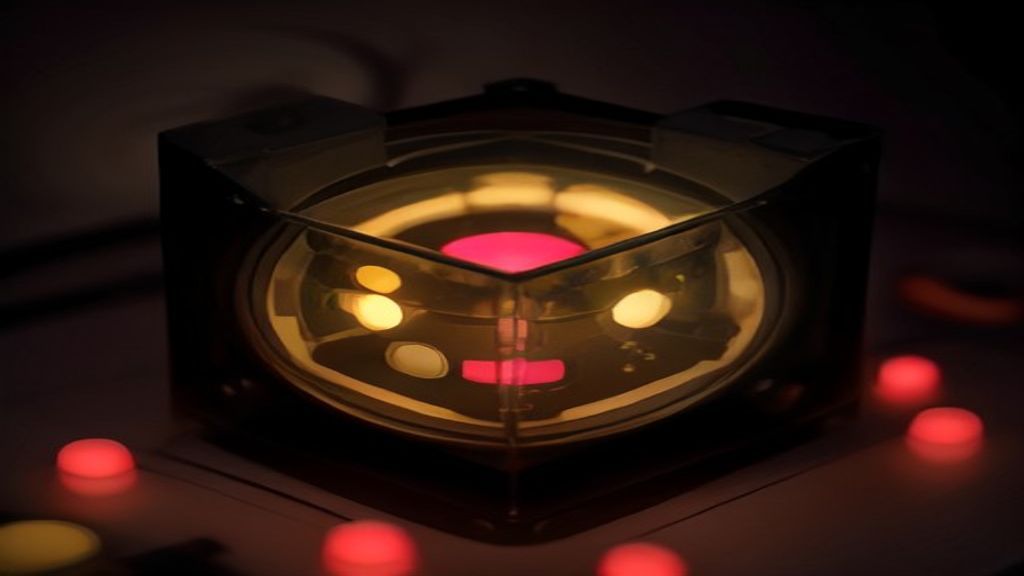
While modern display technologies focus on pushing the boundaries of high-refresh-rate OLEDs and micro-LED panels, there is a distinct, nostalgic charm in looking backward to the absolute origins of video transmission. Long before cathode-ray tubes (CRTs) dominated living rooms, the earliest television systems were purely electromechanical. Today's makers and embedded engineers are breathing new life into these century-old visual concepts, upgrading them with modern microcontrollers, 3D printing...
While modern display technologies focus on pushing the boundaries of high-refresh-rate OLEDs and micro-LED panels, there is a distinct, nostalgic charm in looking backward to the absolute origins of video transmission. Long before cathode-ray tubes (CRTs) dominated living rooms, the earliest television systems were purely electromechanical. Today's makers and embedded engineers are breathing new life into these century-old visual concepts, upgrading them with modern microcontrollers, 3D printing, and high-speed silicon.In this project breakdown, we will explore the Scanwheel: a pocket-sized, widescreen electromechanical television. Despite its vintage foundation, this DIY hardware build achieves an astonishing horizontal resolution of 4,096 pixels (scalable up to 8,000 pixels) across 20 scan lines. Powered by the incredibly versatile Raspberry Pi Pico, this project bridges the gap between 1920s physical engineering and modern embedded systems design.
Understanding Electromechanical Television
To appreciate how the Scanwheel works, we must first look back at the mechanics of early television history. Invented in the late 19th century and popularized by television pioneer John Logie Baird in the 1920s, early mechanical TV systems relied on a rotating disk known as a Nipkow disk.A Nipkow disk features a spiral pattern of precision-drilled pinholes. As the disk rotates at high speed, each hole sweeps across a designated path in front of a modulated light source. By varying the brightness of the light source in perfect synchronization with the spatial position of the hole, a single line of video is drawn. Once a hole completes its sweep, the next hole in the spiral sweeps the adjacent path. When spun fast enough, the human brain merges these fast-sweeping lines into a single, continuous image thanks to the phenomenon of persistence of vision (POV).
While early commercial broadcasts in the 1930s relied on this exact disk-based architecture, the disk model suffers from a significant design bottleneck: physical size. To minimize the curvature of the swept scan lines and prevent image distortion, the disk must be manufactured with a relatively massive diameter. For a pocket-sized device, a disk-based display is simply impractical.
The Breakthrough: Swapping Disks for Drums
The Scanwheel solves the size dilemma by swapping the traditional Nipkow disk for a Nipkow drum. On a drum, the pinholes are arranged in a helical, stair-step pattern along the curved surface of a hollow cylinder.This architectural shift offers two massive advantages for hardware designers:
- Linear Sweep: Because the cylinder rotates on a central axis, the pinholes trace straight, horizontal lines from the perspective of a viewer looking from the side. This completely eliminates the curvature distortion inherent to compact disks.
- Miniaturization: Since curvature is no longer an issue, the cylinder can be scaled down dramatically. The Scanwheel utilizes a 3D-printed drum measuring just 6 centimeters in width, transforming what was once a heavy desktop machine into a pocket-sized unit.
Pushing the Limits of Horizontal Resolution
While the vertical resolution is mechanically constrained by the number of holes on the drum (fixed at 20 scan lines, which is slightly less than Baird’s historic 30-line broadcasts), the horizontal resolution is governed entirely by electronics and software.Because modern LEDs can switch states at nanosecond speeds, we can modulate the light source hundreds of thousands of times per second. By writing data to the LEDs with ultra-precise timing, the Scanwheel achieves a horizontal resolution of 4,096 pixels (commonly referred to as a 4K width). In test environments, the hardware has successfully displayed resolutions exceeding 8,000 horizontal pixels, restricted only by the onboard RAM available for the active frame buffer.
Under the Hood: Harnessing the RP2040's PIO
Synchronizing a high-speed mechanical drum with multi-channel LED modulation requires timing precision that standard microcontrollers struggle to handle using conventional interrupts. A standard CPU core executing code is prone to microsecond-level jitter, which causes flickering, misalignment, and distorted images on a mechanical screen.This is where the Raspberry Pi Pico’s custom RP2040 microcontroller shines. The RP2040 features a hardware block called the Programmable Input/Output (PIO) state machines. PIO blocks are essentially tiny, highly specialized coprocessors that execute basic, cycle-accurate instruction sets independently of the main dual-core ARM Cortex-M0+ CPU.
In the Scanwheel architecture:
- The main CPU cores run a MicroPython runtime, which handles higher-level logic, such as receiving video frame buffers over a network interface and calculating timing steps.
- The PIO blocks take direct control of the high-speed data stream. They fetch pixel arrays from the RAM-resident frame buffer and shift the data directly to the LEDs at cycle-precise intervals.
- The PIO concurrently monitors and coordinates the rotation of the stepper motor driving the drum, ensuring that the light pulses align perfectly with the physical positions of the rotating pinholes.
Build and Hardware Integration
The entire structural casing and the Nipkow drum are designed to be 3D printed. Inside the assembly, a compact stepper motor is connected to a dedicated driver board, powered directly through the Raspberry Pi Pico's USB port. The Pico outputs clock pulses to the stepper driver every millisecond to advance the drum at a perfectly regulated speed.For video input, frame data can be streamed directly into the Pi Pico via a network interface chip or a serial connection. This lets you use the Scanwheel as a secondary monitor mirroring a portion of your main PC screen, or configure it to display live system stats, RSS feeds, or clock faces.
For those eager to dive into the build, the project creator has made the entire design open-source. The official GitHub repository features the source firmware, wiring diagrams, and a customizable OpenSCAD file for the drum. This parametric model allows you to adjust the cylinder diameter, hole counts, and spacing dynamically, letting you scale the project up to support more scan lines or custom dimensions.
Final Thoughts
The Scanwheel is a stellar example of how retro-engineering can be elevated by modern silicon. By utilizing a compact 3D-printed drum and unleashing the power of the RP2040’s PIO coprocessors, this project proves that even historical display methods can yield surprisingly sharp, mesmerizing results. Whether you want a unique clock for your workbench or want to master high-speed hardware timing, building this portable electromechanical TV is an exceptionally rewarding weekend challenge.About EDATA SL
EDATA SL shares practical electronics, embedded systems, Arduino, ESP32, Raspberry Pi, IoT, repair guides, DIY projects and technical news for engineers, students and makers.
Original news rewritten with AI for educational purposes.


0 comments:
Post a Comment