Published: August 27, 2026
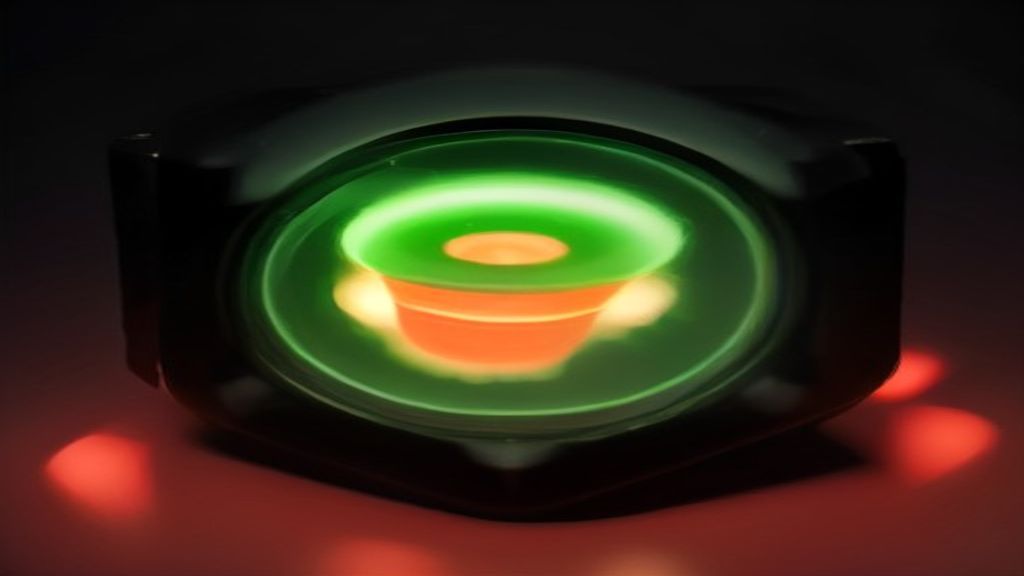
Electromechanical television might seem like an ancient relic of the 1920s, but modern embedded hardware is breathing new, high-resolution life into this century-old technology. Originally pioneered by John Logie Baird, early television systems relied on physical spinning disks to scan and reconstruct visual images. Today, maker and developer communities are taking these foundational concepts and redesigning them for the microchip era.
The Scanwheel is a prime example of this retro-futuristic fusion. It is a pocket-sized, wide-screen electromechanical display boasting an unconventional resolution of 4,096 by 20 pixels. By replacing the classic Nipkow disk with a highly optimized Nipkow drum and driving the system with a Raspberry Pi Pico, this project pushes the boundaries of spatial display technology using everyday maker tools.
Rethinking Display Geometry: Disk vs. Drum
To understand the genius of the Scanwheel, we must first look at the traditional Nipkow disk. A standard Nipkow disk features a spiral series of tiny apertures. As the disk spins, these holes pass in front of a modulated light source. The persistence of vision (POV) effect merges these rapid sweeps into a coherent two-dimensional frame. However, the disk design has a major drawback: to prevent the scan lines from suffering severe, visible curvature, the disk must have a massive diameter. This makes a pocket-sized display practically impossible.
The solution is to switch to a Nipkow drum. On a cylindrical drum, the pinholes are arranged in a stepped, helical pattern along its curved surface. As the cylinder rotates, the holes trace linear, perfectly horizontal paths from the viewer's perspective. This spatial alignment eliminates image warping entirely. Furthermore, because physical curvature is no longer an obstacle, the system can be incredibly compact. The Scanwheel utilizes a 3D-printed drum measuring just 6 centimeters in width, allowing the entire device to fit comfortably in the palm of your hand.
The Math Behind a 4K by 20 Resolution
A vertical resolution of 20 lines might sound incredibly low, but the Scanwheel compensates with an ultra-wide horizontal layout. Why is the horizontal resolution so massive while the vertical is physically limited by the number of holes? It comes down to modulation speeds.
While the vertical scan lines are physically locked to the 20 spiraled pinholes on the drum, the horizontal pixels are generated purely through temporal modulation. Modern light-emitting diodes (LEDs) can be switched on and off at megahertz frequencies. By pulsing the LEDs at extremely precise intervals as each hole sweeps across the viewing window, we can segment a single scan line into thousands of individual virtual pixels. In this case, the horizontal resolution of 4,096 pixels is bounded not by mechanical constraints, but by the memory capacity of the microcontroller's frame buffer. In bench testing, this configuration has successfully scaled beyond 8,000 horizontal pixels, enabling incredibly detailed text and video rendering across its panoramic layout.
Leveraging the RP2040’s PIO Silicon
Achieving microsecond-level accuracy in LED modulation while simultaneously driving a stepper motor requires a highly specialized processor. Standard microcontroller architectures struggle with this level of deterministic timing, as interrupt latency and background CPU tasks frequently introduce visual jitter.
This is where the Raspberry Pi Pico and its custom RP2040 silicon shine. The RP2040 features a hardware block known as Programmable Input/Output (PIO). PIO consists of dedicated, ultra-compact coprocessors that run independent of the primary dual ARM Cortex-M0+ cores. These PIO state machines excel at pushing high-speed, cycle-accurate data to external peripherals.
For the Scanwheel, the PIO handles the heavy lifting:
- Simultaneous Multi-Channel Driving: The PIO streams data to five independent LEDs positioned behind different zones of the drum. This includes driving a high-speed RGB LED for a multi-colored center display.
- Deterministic Motor Timing: The PIO state machine sends precise step pulses to a dedicated driver board to rotate the stepper motor with sub-millisecond accuracy, guaranteeing perfect sync between the physical drum's position and the LED modulation timings.
- CPU Offloading: Because the PIO handles all real-time data serialization directly from memory, the main CPU cores remain entirely unburdened. The primary system firmware, written in lightweight MicroPython, simply orchestrates the initial setup and streams video frame buffers to the PIO registers.
Hardware and Customization Options
The mechanical architecture of the Scanwheel is designed for high accessibility. It consists of a 3D-printed casing, a compact stepper motor, a driver board, and the Raspberry Pi Pico. The entire apparatus draws minimal current and runs directly off the Pico’s 5V USB connection.
For developers who want to experiment with different formats, the developer has provided an OpenSCAD design file alongside the core firmware repository. OpenSCAD is a code-based 3D modeling tool, allowing you to modify parameters such as the drum diameter, width, and pinhole spacing. By adjusting these variables, you can effortlessly scale the design to accommodate more vertical scan lines, creating a larger or higher-resolution display.
Streamed Video and Creative Applications
While the Scanwheel was originally conceived as a creative digital desktop clock—using five distinct light zones to represent hours, minutes, and seconds—its massive horizontal bandwidth opens the door to far more complex video applications. By establishing a high-speed serial or network connection to a host computer, you can mirror a slice of your primary screen or stream custom animations directly into the Pico’s frame buffer.
Whether you want to build a unique dashboard widget, an eye-catching IoT status display, or simply dive deep into the fascinating mechanics of early video engineering, the Scanwheel offers a perfect blend of retro logic and cutting-edge embedded design.
About EDATA SL
EDATA SL shares practical electronics, embedded systems, Arduino, ESP32, Raspberry Pi, IoT, repair guides, DIY projects and technical news for engineers, students and makers.
Original news rewritten with AI for educational purposes.


0 comments:
Post a Comment