Published: November 06, 2026
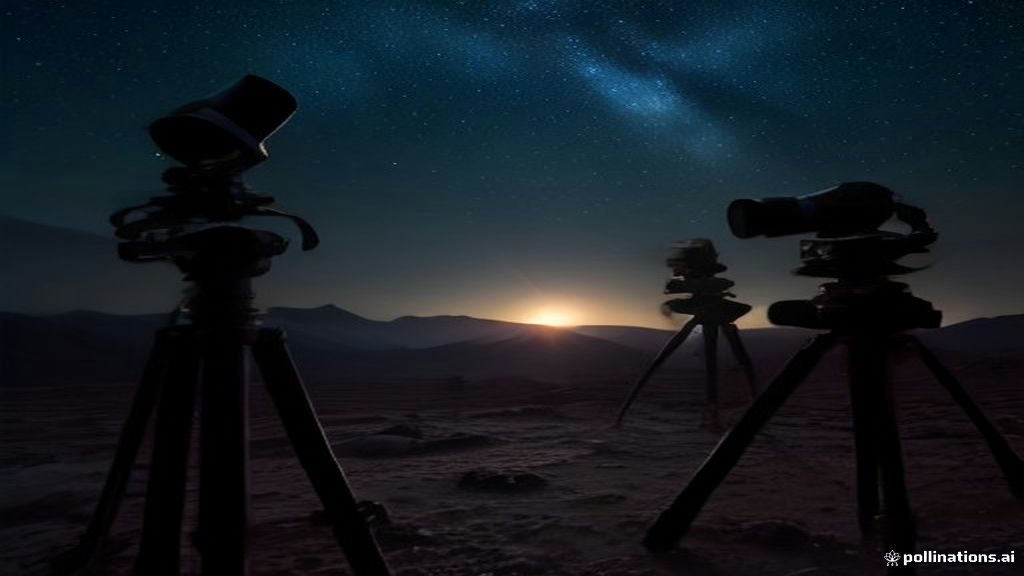
Capturing high-fidelity data from the solar corona represents one of the most challenging signal-processing and optical engineering tasks in solar physics. While the Sun's visible surface radiates intense luminosity, its outer atmosphere—the corona—is a faint plasma structure bathed in magnetic fields and heated to millions of degrees Celsius. Observing this delicate feature requires isolating it from the overwhelming dynamic range of the solar disk, a feat naturally achieved only during total solar eclipses when the Moon serves as an ideal spatial occulter.
To capture this fleeting phenomenon, mathematical image processing expert Professor Miloslav Druckmüller from the Brno University of Technology, in collaboration with solar physicist Shadia Habbal and the Solar Wind Sherpas team, has engineered a specialized optical and computational acquisition methodology. By coupling multi-spectral astrocameras with high-performance bracketed imaging algorithms, the team extracts detailed thermal and magnetic maps of the corona that space-borne coronagraphs cannot match.
Overcoming Extreme Dynamic Range and Optical Diffraction
In standard solar observation, artificial occulters within satellite telescope systems (coronagraphs) block the central solar disk. However, light wave diffraction across the edges of an internal mask forces these instruments to obscure a region far larger than the Sun itself. This masks the innermost coronal layers where fundamental thermal acceleration processes occur.
A natural total solar eclipse eliminates internal instrument diffraction because the occulter—the Moon—is located hundreds of thousands of kilometers away. Nevertheless, recording the inner corona introduces severe high-dynamic-range (HDR) challenges. The intensity ratio between the brightest regions near the solar surface and the faint outer plasma streamers can reach up to 1,000,000:1. Given that typical digital displays offer dynamic ranges far lower (often around 800:1 to 1000:1 for conventional displays), capturing and rendering these structures requires aggressive multi-frame exposure bracketing and numerical calibration.
Multi-Spectral Hardware and Custom Camera Arrays
To record thermal ionization patterns across the coronal envelope, the research team constructs custom multi-camera arrays. During field deployments, such as a recent expedition to Spain during a brief 107-second totality window, the team deployed an array of up to 20 astrophotography sensors and specialized multi-spectral instruments.
A core element of their hardware setup is a custom 8-camera optical rig optimized for iron-ion emission spectroscopy. Iron is the primary heavy element within the solar corona. As ambient temperature escalates, iron atoms lose successive electrons, transforming into distinct ionic species. For example:
- Fe XII (+11 electrons lost): Emits light at specific spectral lines indicative of plasma temperatures around 1.4 million °C.
- Fe XIII (+12 electrons lost): Signifies regions reaching approximately 1.6 million °C.
By fitting each camera with ultra-narrowband optical interference filters—featuring passbands as narrow as 1 nanometer—the instrument selectively isolates the narrow photon emission wavelengths associated with each iron charge state. Physically, these optical filters reflect almost all out-of-band radiation, appearing as mirror surfaces under ambient lighting while selectively passing narrow ionic spectral signals to the camera sensors.
To build these rigs under tight resource constraints, the team integrates surplus high-grade optical lenses mounted on laser-cut aluminum baseplates and custom 3D-printed structural brackets. Power distribution for the entire sensor suite relies on isolated DC supplies buffered by automotive battery systems to prevent power dropouts during temporal acquisition windows.
Algorithmic Image Acquisition and Signal Calibration
The acquisition sequence during a 100-second totality event requires extreme operational automation. The computer-controlled camera hardware records up to 200 raw frames per camera, with exposure times dynamically bracketed from 0.001 seconds (1 millisecond) to 2.0 seconds.
Converting hundreds of raw exposure frames into a scientifically meaningful high-dynamic-range composite requires an extensive calibration pipeline:
- Dark Frame Subtraction: To compensate for sensor thermal noise, fixed-pattern sensor artifacts, and dark current baseline drift, thousands of dark frames are captured with the optical aperture shielded. These frames establish a sensor-level noise profile that is subtracted from raw image frames.
- Flat-Field Correction: Variations in pixel-to-pixel sensitivity, dust particles on sensor cover glass, and optical vignetting are normalized using flat-field calibration frames recorded against uniform light sources.
- Mathematical Alignment and Adaptive Dynamic Range Mapping: Druckmüller’s numerical processing algorithms align the calibrated sub-exposures to fractional pixel accuracy, compensating for minor optical shifts and atmospheric turbulence. The algorithm then intelligently compresses the massive multi-stop dynamic range, preserving edge sharpness and contrast without saturating the inner corona or under-exposing faint coronal streamers.
Processing a single master multi-spectral image requires evaluating up to 3,000 input frames and can demand more than 48 hours of computational processing time per composite frame. The resulting output reveals fine-scale plasma structures, coronal loop dynamics, and magnetic flux lines extending millions of kilometers into space.
Engineering Lessons for Embedded and Imaging Systems
For embedded developers, robotics engineers, and Maker communities, the methodology behind solar corona photography provides key insight into designing robust data-acquisition architectures:
- Noise Isolation: Sensor-level calibration (dark/flat frame math) is vital when pushing off-the-shelf optical sensors to their signal-to-noise ratio limits.
- Hardware/Software Co-design: Combining specialized physical filtering (narrowband optical filters) with post-processing numerical algorithms extracts signals that would be impossible to isolate using either hardware or software alone.
- System Redundancy: Deploying distributed acquisition nodes across multiple geographic locations mitigates path-loss risks such as atmospheric cloud cover.
Through the integration of vintage optics, modern CMOS sensors, custom mechanical mounting, and computational imaging, engineers and mathematicians continue to illuminate the complex thermodynamic systems governing our nearest star.
About EDATA SL
EDATA SL shares practical electronics, embedded systems, Arduino, ESP32, Raspberry Pi, IoT, repair guides, DIY projects and technical news for engineers, students and makers.
Original news rewritten with AI for educational purposes.


0 comments:
Post a Comment