Next-Gen Assistive Tech: Teen Inventors Win IEEE Presidents' Scholarship with Innovative Robotics
Published: August 18, 2026
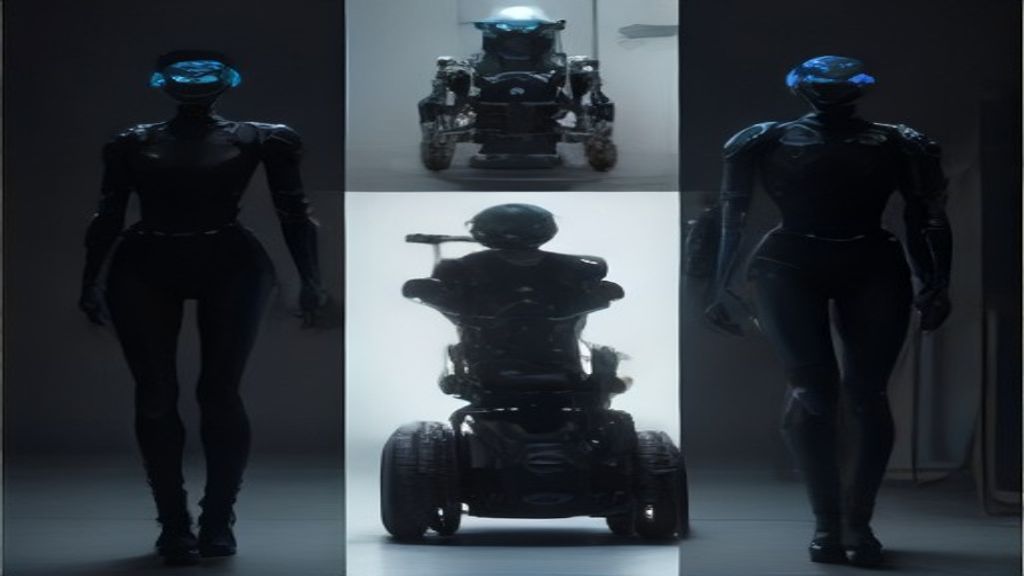
According to data from the World Health Organization, more than one billion people—representing approximately 16 percent of the global population—live with some form of disability. For many, these physical limitations directly impact personal autonomy and mobility. At this year's Regeneron International Science and Engineering Fair (ISEF) in Phoenix, three brilliant high school students showcased remarkable engineering designs aimed at restoring independence. Their pioneering projects, ranging from non-invasive neural interfaces to rugged disaster-response robotics, earned them the prestigious IEEE Presidents' Scholarship awards.
Presented by IEEE President Mary Ellen Randall, these awards celebrate the next generation of engineers who display an extraordinary understanding of electrical engineering, computer science, and embedded systems. In addition to financial backing for their university studies, the recipients received complimentary IEEE student memberships and the coveted IEEE President's coin. For hardware developers and embedded enthusiasts, these award-winning projects offer a masterclass in how creative problem-solving and rapid prototyping can solve complex, real-world problems on a budget.
1. Tonguage: Hands-Free Control via Computer Vision
Securing the top prize and a $10,000 scholarship, sophomore Hollie Tang from Wilson High School in California developed Tonguage. This non-invasive, computer-vision-based human-machine interface (HMI) empowers users with severe mobility limitations to control digital systems and hardware, such as motorized wheelchairs, using only facial movements.
Unlike traditional assistive devices that require expensive, specialized hardware, Tang designed Tonguage to run using standard, budget-friendly laptop webcams. The system processes video input in real-time, mapping tongue movements to a directional cursor while using eye blinks to register mouse clicks. The software translates complex tongue positioning and continuous movement patterns into precise, actionable system commands.
For safety-critical applications like wheelchair navigation, Tang implemented an advanced facial-tracking filter. This security layer ensures the system only processes commands from the primary user, completely ignoring any bystanders who might walk into the camera's field of view. Beyond basic navigation, Tang's vision includes restoring autonomy in daily life, such as enabling disabled individuals to participate in gaming and digital entertainment. It is a powerful reminder of how empathy, combined with computer vision, can revolutionize assistive technology.
2. NeuroGait: A $276 Mind-Controlled Exoskeleton
The second-place award went to Partap Sidhu, a junior at Bethpage High School in New York, who designed NeuroGait—an incredibly cost-effective, mind-controlled lower-limb exoskeleton. Inspired by watching people struggle with multi-story stairs at a local community center that lacked elevators, Sidhu set out to design a wearable robotic solution that bypasses the massive price tag of commercial exoskeletons.
NeuroGait functions by reading the Bereitschaftspotential (BP), a subtle readiness potential generated by the brain one to two seconds before physical movement is consciously initiated. Using a custom electroencephalogram (EEG) headset, these electrical signals are processed by a localized Convolutional Neural Network (CNN). The neural network achieves an astonishing 99.9% accuracy in identifying the user's intent, translating brainwaves into hardware instructions with an overall system execution accuracy of 95.2% across hundreds of trials.
On the mechanical side, Sidhu bypassed traditional, heavy servo motors in favor of pneumatic artificial muscles (PAMs) that he engineered himself. These pneumatic actuators mimic natural human muscle groups, offering compliance and flexibility that protect the user from injury. What makes NeuroGait a game-changer for the DIY and open-source hardware community is its price point: Sidhu fabricated the entire functional system for just $276. By contrast, commercial medical exoskeletons regularly retail between $40,000 and $100,000. Sidhu’s design proves that sophisticated biomedical engineering is accessible to determined student makers.
3. Math Into Motion: A Rugged Hexapod for Hazardous Zones
Third place was awarded to Calvin Shang Hung, a sophomore at El Cerrito High School in California, for his project Math Into Motion: Robotic Hexapod for Hazardous Environments. Inspired by the mobility challenges faced by planetary rovers on Mars, Hung designed a six-legged robot capable of navigating highly unstable terrains where wheeled platforms fail.
Following the devastating 2023 earthquake in Türkiye, Hung shifted the focus of his project to search-and-rescue applications. The hexapod relies on a stable tripod gait, maintaining three ground contact points at all times while the remaining three legs transition forward. This mechanical stability allows the robot to climb over rubble to search for survivors or transport delicate medical payloads like insulin into active disaster areas.
With no prior formal training in electrical engineering, Hung taught himself PCB design, 3D modeling, firmware programming, and soldering. To coordinate eighteen individual joints across legs pointing in different directions, he mastered three core mathematical concepts: Inverse Kinematics (IK), which calculates the precise joint motor angles required to place a foot at a specific coordinate in 3D space; Linear Interpolation (LERP), which smooths out leg trajectories by breaking major movements down into tiny, incremental steps to prevent sudden, destabilizing jerks; and Euclidean Transformations, which correct coordinate systems so that directional commands steer the robot accurately, regardless of individual leg orientations.
The development process was not without its hurdles. After seven months of prototyping, a major electrical failure on his third custom circuit board nearly forced him to quit. Instead, Hung simplified his architecture, redesigned the PCB, and successfully built a fourth version that walked flawlessly. His journey serves as an inspiring example of engineering resilience for any maker tackling complex robotics.
Bridging Engineering and Empathy
These three outstanding student projects highlight a shifting paradigm in modern robotics and embedded systems design. Technical skill is no longer just about optimizing clock speeds or maximizing torque; it is about combining advanced engineering disciplines—such as neural networks, computer vision, and mathematical modeling—with deep empathy to solve human challenges. By democratizing access to high-end medical and rescue equipment, these young innovators are proving that the future of technology belongs to those who build with a purpose.
About EDATA SL
EDATA SL shares practical electronics, embedded systems, Arduino, ESP32, Raspberry Pi, IoT, repair guides, DIY projects and technical news for engineers, students and makers.
Original news rewritten with AI for educational purposes.


0 comments:
Post a Comment